
Finding Residents Across Kankakee
Kankakee has no single public roll of every household. Each official source proves a smaller fact. The parcel system names an owner and shows the physical parcel address. The recorder indexes people named in land documents. Illinois voter verification tests a name and address combination, while the court portal can connect a party name with a case number and filing history. Printed directories and newspapers cover earlier decades. A renter, child, unregistered voter, or person using a protected address may appear in none of those current sources.
Choose the first record by the fact in hand. An address belongs in the parcel search. A name belongs in voter, court, and deed indexes. An old date belongs at the library or archives. Then compare results rather than forcing them into one story.
- Search the county parcel roll by owner name or site address, and record the parcel number.
- Use Illinois voter verification only when the required name, birth date, ZIP, and street details are known.
- Check the Recorder's grantor and grantee index for an ownership trail.
- Compare an older address with city directories, newspaper notices, and archive holdings.
- Ask the correct custodian for a specific record that is not online.
Kankakee Resident Record Keepers
Three county offices form the core of a Kankakee residents directory search. The Recorder of Deeds keeps recorded land documents and the name index. The County Clerk handles elections, voter registration, vital records, and genealogy requests. County assessment staff and the treasurer publish parcel and tax facts through DEVNET. The Circuit Clerk, at a separate Court Street location, controls state court files. City permits, council minutes, maps, and code files remain with the City Clerk and city departments. Asking one office for another office's record wastes time, so identify the custodian before calling or mailing.
Most county offices share the courthouse address, but the Circuit Clerk is at 450 E Court Street. Confirm the room and hours before an in-person visit.
Kankakee DEVNET Resident Clues
The free Kankakee County DEVNET Wedge Parcel Search accepts more than a simple address. It can find a parcel through a partial owner name, street number, street name, sale date, sale price, tax code, legal description, property class, or parcel number. A separate tab searches mobile homes. The site advises leaving street suffixes out of street-name searches. Results can show the taxpayer name, mailing address, property address, legal description, class, assessment values, exemptions, sale history, and tax details.
| DEVNET field | Useful input | Why it helps |
|---|---|---|
| Owner name | Full or partial name | Finds parcels tied to a named owner |
| Property address | Number and street | Anchors the physical site |
| Parcel number | County parcel ID | Links tax, GIS, and deed work |
| Sale fields | Date or price range | Narrows a transfer period |
| Legal description | Subdivision or lot text | Helps when street labels changed |
The captured parcel-search screen shows how those paths share one interface.
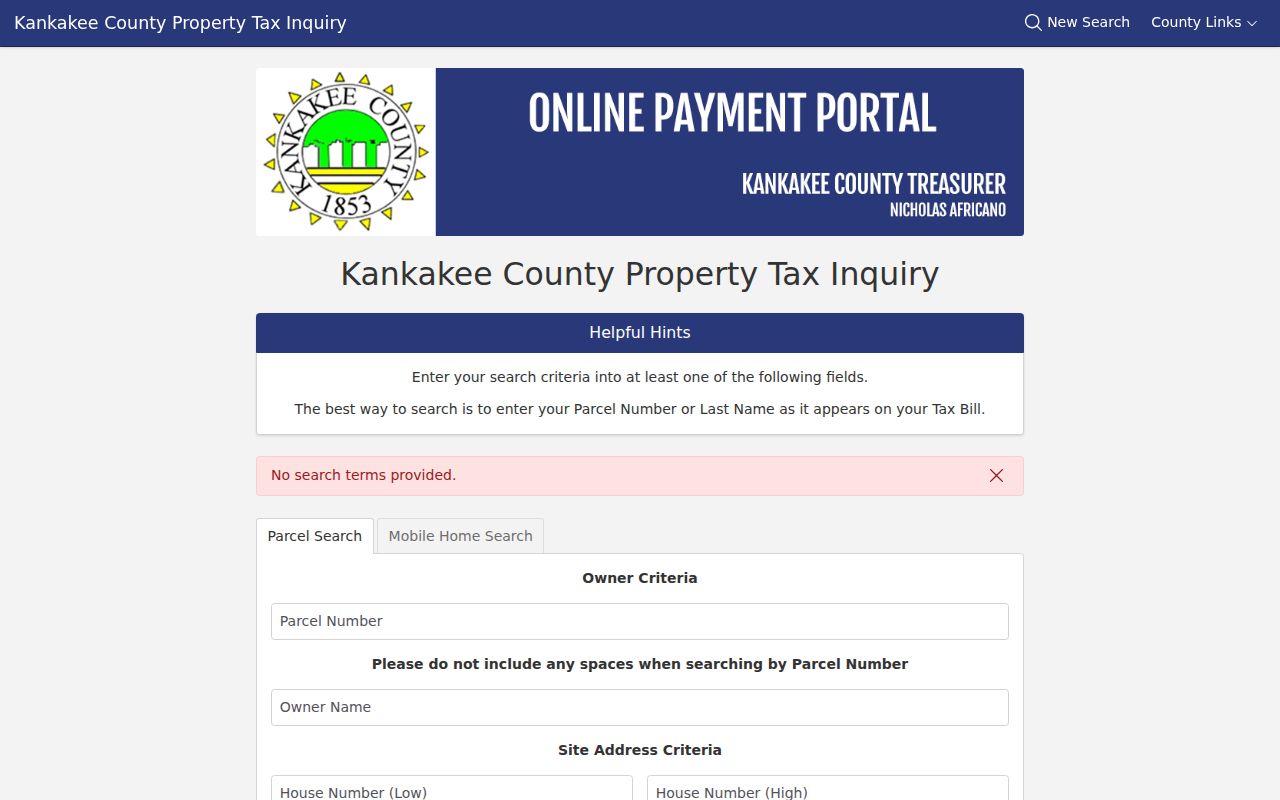
That range of fields makes the parcel system a strong starting point, but it identifies taxable ownership, not every person who lives at an address.
Kankakee Deed Index Choices
The Kankakee County Recorder offers three different access routes. Direct Search supplies land-record data without document images and warns that its data can trail recording by ten days. Tapestry is a pay-as-you-go service for occasional work; the researched page lists an $8.95 current-page charge plus search and image costs. Laredo requires an account and subscription, but it uses the same interface found at courthouse workstations. The office counter remains vital for older material.
A grantor is the person giving an interest in land. A grantee receives it. Search both roles, allow for initials and spelling shifts, and use the parcel's legal description to confirm that two similar names concern the same property. The Recorder advertises online indexing through 1984, while its FAQ places some pre-1989 historical research at the counter. Confirm that handoff with staff before treating an empty online result as proof that no document exists.
The Recorder access overview is preserved in the image below.
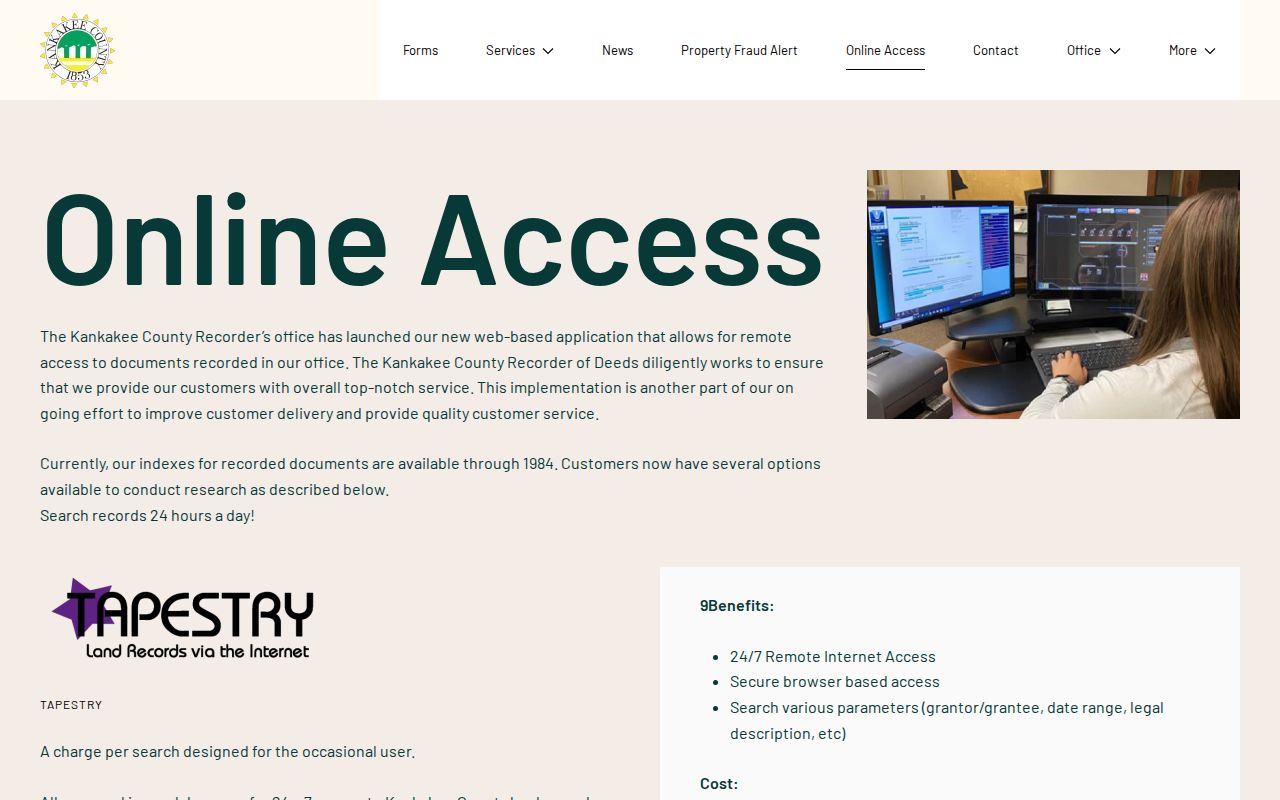
It separates the one-time, subscription, data-only, and courthouse routes that a resident search may require.
The Recorder also publishes a current recording-fee schedule, which should be checked before submitting a document or ordering related service.
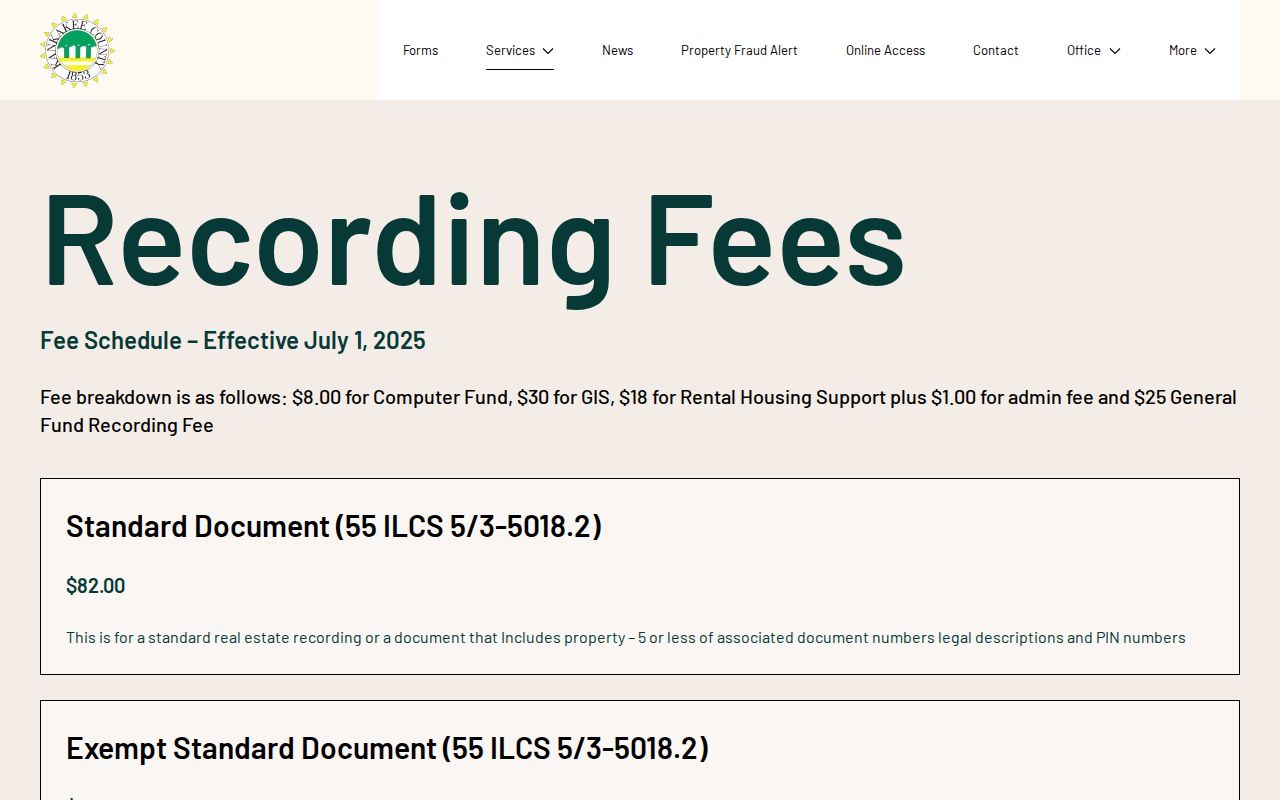
The captured schedule helps separate a search or image cost from the statutory charge to record a new instrument.
Illinois Voter Lookup Limits
The Illinois Online Voter Registration Verification is a verification form, not a browseable Kankakee residents directory. It asks for first and last name, birth date, five-digit ZIP, street number, and a street name selected after the ZIP is entered. That design is useful when several facts are already known. It is poor for exploring an entire block or testing vague name fragments.
Illinois Election Code, 10 ILCS 5/4-8, identifies public registration fields but restricts electronic voter-list use. The State Board of Elections also has a computerized voter-data request route with purpose and cost rules that vary by product and geography. A failed verification may reflect changed registration, a formatting mismatch, or a protected address. It does not prove that a person is absent from Kankakee.
Lawful use. Use Kankakee resident records for legitimate personal research. Never use an address trail to stalk, threaten, harass, or harm anyone.
Today's Kankakee Resident Directories
Current official sources cover different groups. Property records list owners and taxpayers, not all occupants. Voter verification covers registered voters who match the required input. Deed indexes list parties to recorded instruments. Court search lists named parties in public cases. City staff pages list officials and departments, not private households. The most accurate Kankakee residents directory result comes from matching the source to the question and preserving the date on which it was checked.
| Official source | People represented | Custodian | Access path |
|---|---|---|---|
| Parcel and tax roll | Owners and taxpayers | Kankakee County | Free DEVNET portal |
| Voter verification | Matching registered voters | Illinois elections system | Free fact-matching form |
| Recorded documents | Grantors, grantees, and other parties | County Recorder | Direct Search, Tapestry, Laredo, counter |
| Court index | Parties in public court matters | Circuit Clerk | Tyler portal, kiosk, clerk request |
| Vital and genealogy records | Eligible event subjects and family researchers | County Clerk or IDPH | Counter, mail, approved vendor, state forms |
Commercial people-finder results may blend stale data from unknown dates. Official indexes are narrower, but they identify the keeper, search fields, access limits, and correction route. Those traits make them easier to verify.
Kankakee Court Name Records
The Tyler Odyssey Public Portal provides anonymous Smart Search and hearing-search routes for Kankakee County court records. Smart Search accepts a record number or name and offers advanced filters. Cases and judgments are selected by default, and a CAPTCHA protects submission. A result may supply a case number, party role, filing date, event history, disposition, and document entries, but an index is not the same as a certified court file.
The captured Kankakee portal screen shows the public entry point.
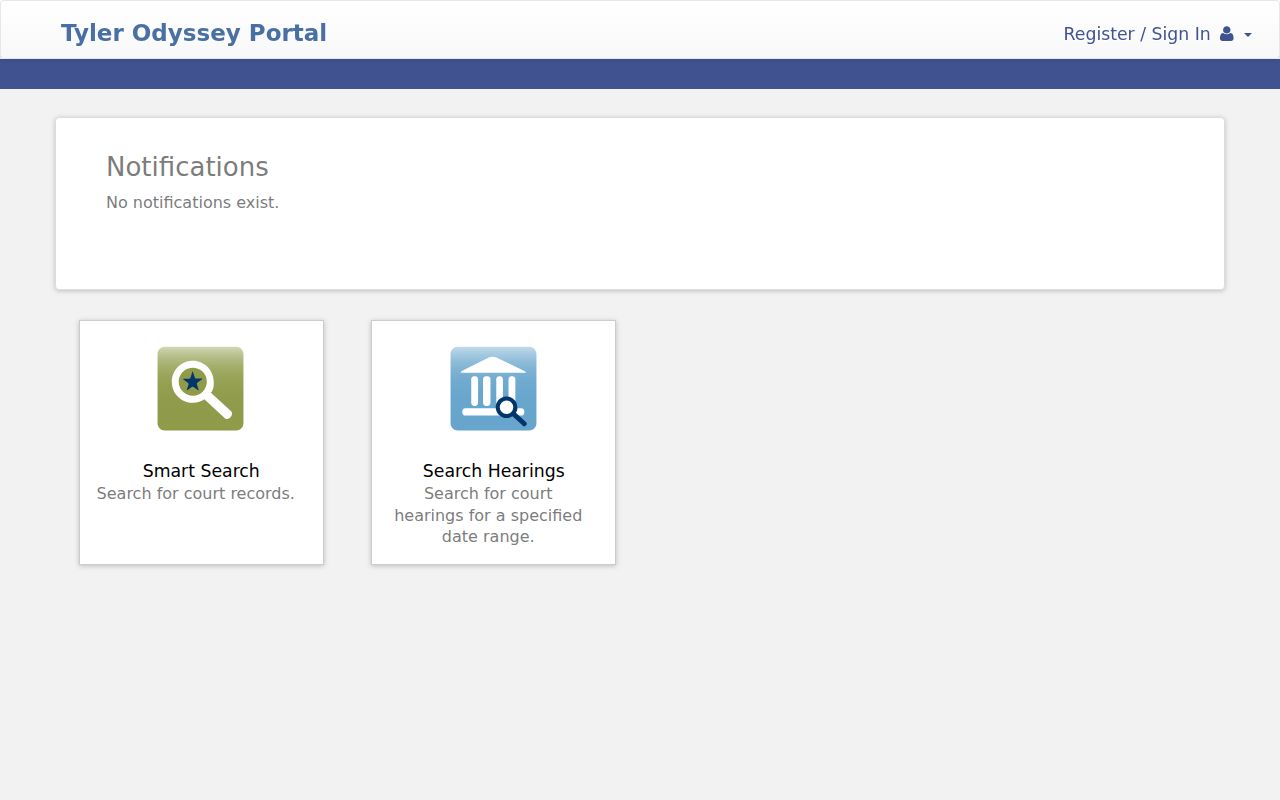
If the portal is unclear, use the public kiosk or ask the Circuit Clerk about access. Court records are judicial records, so the ordinary county FOIA route is not a substitute for the clerk's court-file procedure.
The Circuit Clerk site supplies forms and office guidance.
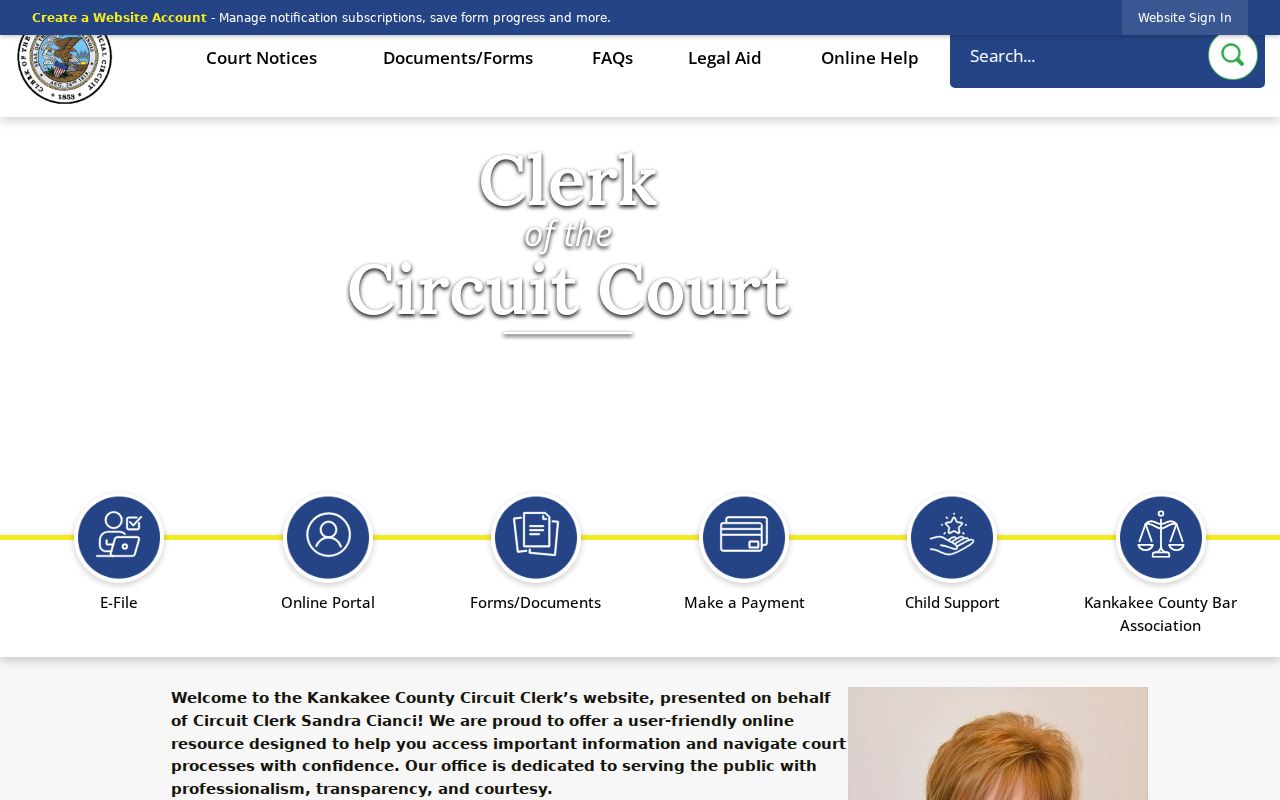
Use both sources together: the portal locates a case, while the clerk explains how to inspect or obtain the authoritative file.
Kankakee City Record Requests
City-held records require a different route. The Kankakee City Clerk is the records custodian for council minutes, ordinances, resolutions, contracts, and municipal maps. The city says permanent council minutes reach back to incorporation in 1855. Planning and zoning pages provide maps, ordinances, subdivision rules, floodplain material, and zoning-verification forms. Building and code pages link permit, plan-review, right-of-way, code-violation, and fire-alarm forms, but the research found no public permit or code-case index.
For a specific city record, use the Kankakee FOIA route. Describe the department, address, record type, and date range, and ask for electronic copies when practical. Illinois FOIA, 5 ILCS 140/3, generally sets a five-business-day response period for ordinary requests and permits a five-business-day extension in defined cases. A focused request works better than asking the city to identify a person.
Kankakee Vital Record Paths
The Kankakee County Clerk vital-records desk accepts eligible requests at the counter, by mail, and through VitalChek. Birth, death, and marriage certificates have different identity and relationship rules. Local genealogy access also opens at different ages: the county materials state 75 years for births, 20 years for deaths, and 50 years for marriages. County marriage records begin in 1853. Ordinary certified copies remain restricted even when a public index helps locate an event.
The genealogy form costs $10 for the search and first genealogy copy, then $2 for each additional copy as printed on the inspected form. Birth and marriage applications list $10 for the first certified copy and $4 for another. Death applications list $14 and $8. Fees can change, so confirm the form before payment. For state-held records, use Illinois Department of Public Health forms. Divorce decrees belong to the Circuit Clerk, not the vital-records desk.
Kankakee Library Name Trails
The Kankakee Public Library genealogy room bridges current records and older households. It holds Daily Journal and predecessor newspaper microfilm described as running from the 1850s to the present, a local obituary index, genealogy-room resources, and access to HeritageQuest and ProQuest African American Heritage. Some licensed databases need a library card or an in-library workstation. Adult Services can help with a focused question, and interlibrary loan can reach local-history books or microfilm not held on site.
The library genealogy page appears in the research capture.
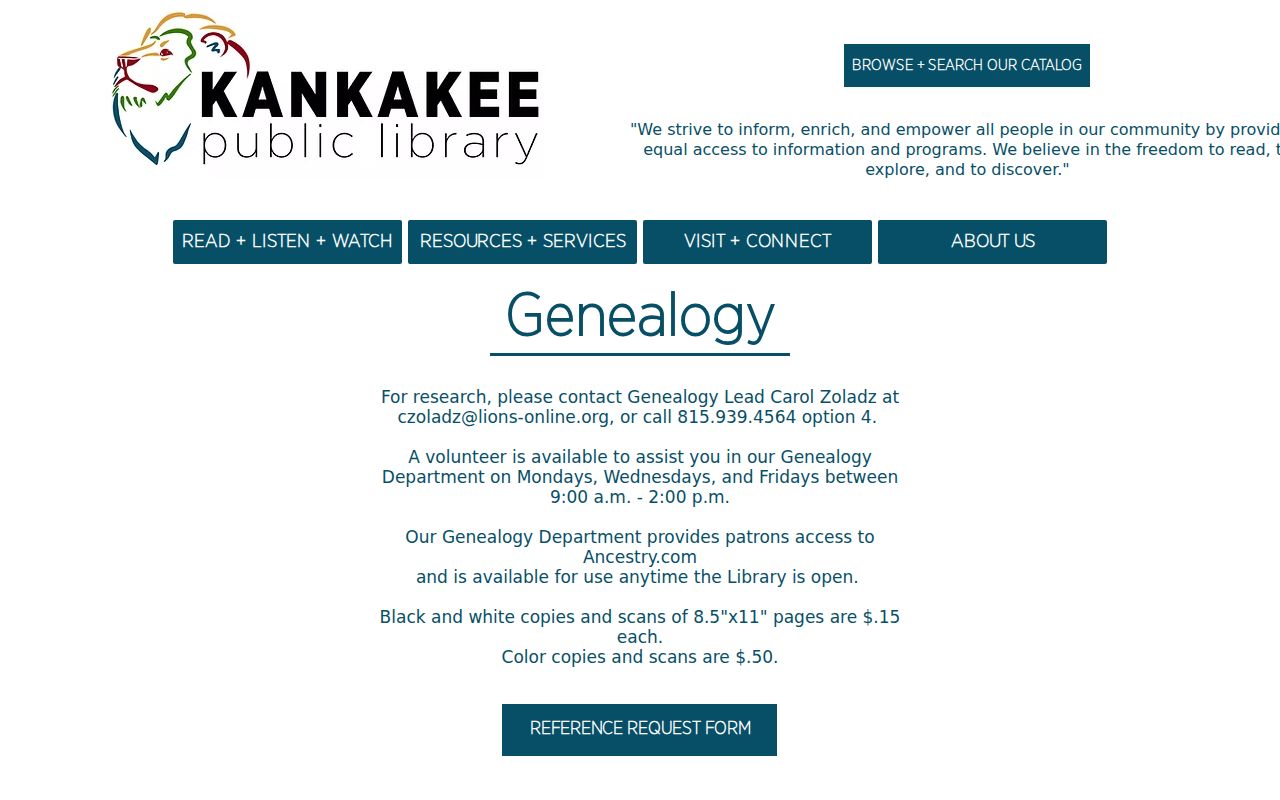
Ask for an exact newspaper title, date, and page when possible. The library also warns that a Kankakee mailing address does not always mean city residency, an important check before assuming that a postal label places someone inside municipal limits.
Kankakee Record Terms Decoded
A few record terms prevent major search errors. They describe how information is organized, not how certain it is.
- Parcel
- A mapped unit of land with a county identification number. It may contain more than one structure or address.
- Index
- A finding list that points to a record. It is not necessarily the document image or a certified copy.
- Situs address
- The physical location of a parcel, which can differ from the taxpayer's mailing address.
- Criss-cross directory
- A printed directory arranged by street and house number, useful for older address research.
- Docket
- The dated list of filings and events in a court case.
These distinctions matter. A mailing address does not prove residence, an index hit does not prove what the underlying document says, and a parcel owner is not a complete household list.
Federal Cases Tied to Kankakee
Some names move beyond county court. The Central District of Illinois public-access page explains federal docket access and sends users to PACER. The federal system needs its own account and may charge for pages. It should be searched only when there is reason to expect a federal case, not as a substitute for the Kankakee court portal.
The district court access page was captured as part of the Kankakee records inventory.
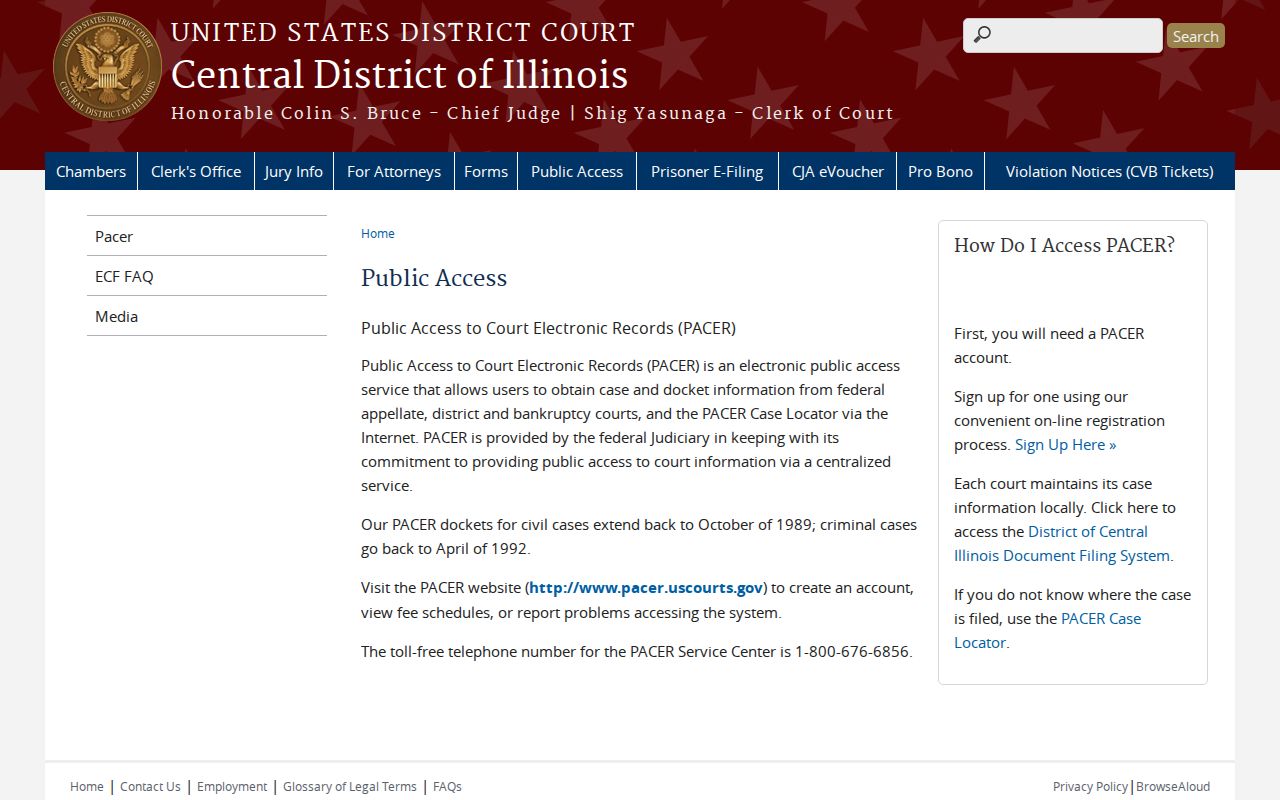
That page distinguishes local federal access from the nationwide case locator.
The separate PACER service page shows the national account and search route.
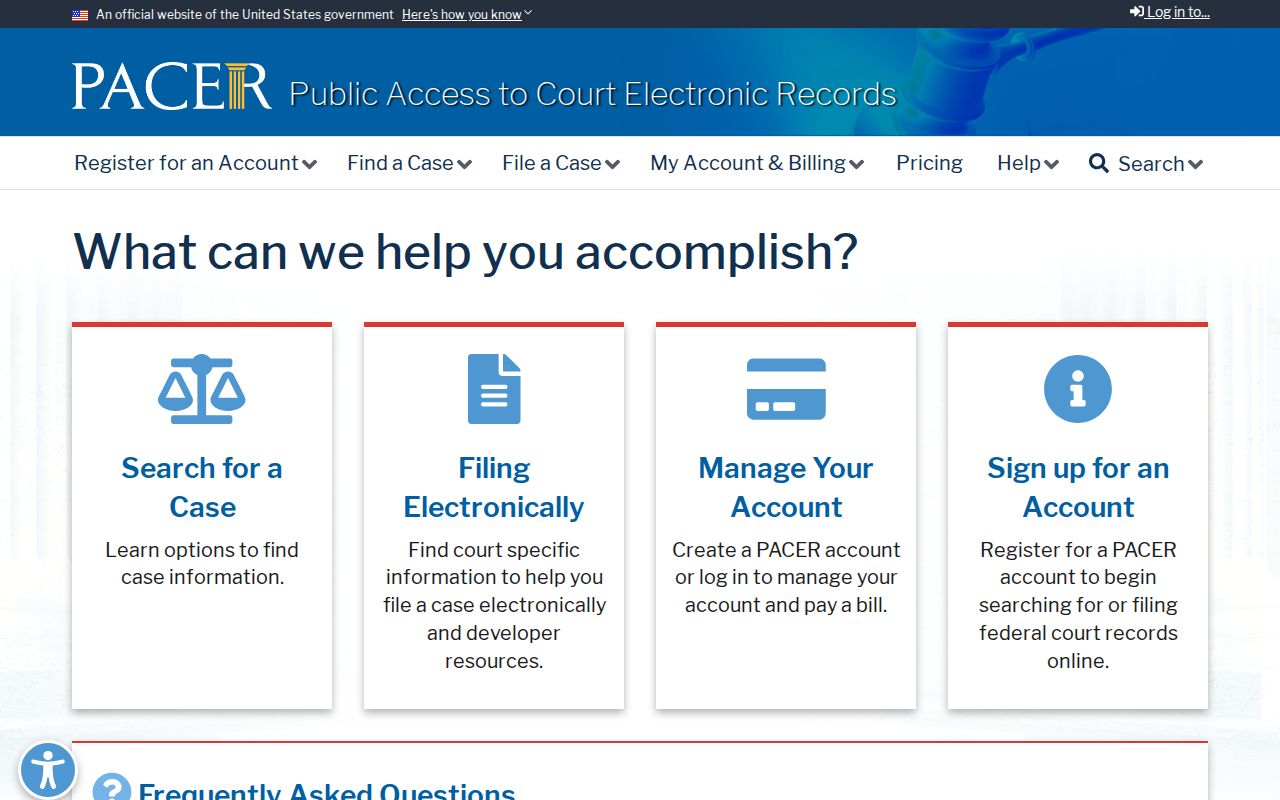
Match any federal result by case number and court before treating a shared name as the same Kankakee resident.
Kankakee Privacy Has Boundaries
Public records can still omit or protect addresses. The Illinois Attorney General's Address Confidentiality Program provides a substitute address and mail forwarding for qualifying survivors. It does not erase older records or automatically hide historical property documents. Sealed or expunged court matters also may disappear from public view. Driver and motor-vehicle address data is protected under federal and state rules, and no public utility-customer directory was found in the research.
Commercial listings have their own correction and opt-out procedures, but an opt-out there does not remove a county deed or tax record. Corrections must go to the office that created the source. Use the parcel office for assessment data, the Recorder for an index issue, the Circuit Clerk for a court record, and the library for a directory citation.
Kankakee's Historical Resident Directories
Kankakee city directories survive in uneven runs rather than one complete series. Local research identifies an 1876 directory with name, occupation or descriptor, and compass-style address notes. Later Polk volumes and city-only runs are held through local library, genealogical, museum, and archive channels. A printed entry may name a spouse, occupation, employer, house number, or owner and renter mark, but abbreviations must be read with that volume's key. Street names and house numbers also need to be checked against maps and plats.
The Kankakee Public Library supplies microfilm and staff help. The Kankakee County Museum offers research appointments and charges for staff research and copies. IRAD at Illinois State University holds historical county and municipal series listed in its online finding aid. The full shelf, year runs, and household-tracing method are developed in the Kankakee city directory collections.
Historical sources are strongest when paired. A directory places a name at an address, a Sanborn map explains the structure and block, a census describes the household, and a deed identifies ownership. Together they can show change without claiming that every occupant was printed.