
Kankakee Previous Resident Sources
Kankakee previous residents appear in sources created for different public purposes. DEVNET supplies a present parcel key. The Recorder of Deeds supplies the transfer chain. City directories and federal census schedules can identify occupants, while Sanborn maps establish what stood on the lot. The table keeps those roles distinct.
| Source | Years It Covers | Where Held | What It Shows |
|---|---|---|---|
| Recorder deed index | 1853 onward; online coverage stated through 1984 | Recorder counter, Tapestry, Laredo, Direct Search | Grantors, grantees, document dates, legal descriptions |
| City directory runs | 1876 through 1981, with gaps | Kankakee Public Library and surviving KVGS finding aids | Named people, occupations, firms, and street notation |
| Federal census | Public schedules through 1950 under the 72-year rule | Library genealogy databases and archives | Household members and relationships at the census date |
| Sanborn maps | 1887, 1892, 1896, 1901, 1907, 1914, and 1948 sets located | Library of Congress | Building footprint, use, materials, stories, and street layout |
| Assessor and tax books | IRAD assessor books, 1851-1920 | IRAD finding aid and modern DEVNET | Parcels, assessed property, and tax context |
Start with DEVNET for a modern numbered address. For a late nineteenth-century location written as a corner or side of a street, begin with the directory and a Sanborn sheet, then connect the lot to a legal description. A missing directory year is not proof that the household left. Check the nearest years, a census, deed, obituary, or newspaper notice.
Kankakee Address Keys Today
The Kankakee County DEVNET parcel search accepts parcel number, owner name, house-number range, street, city, sale dates, sale prices, tax classifications, and legal description. A parcel number, often called a PIN, is the strongest key because street text can change. The situs address is the physical location. The mailing address is where the tax bill goes, and may be elsewhere.
Record the PIN, situs address, owner display, legal description, township, sale date, and tax year. Ownership does not prove occupancy, and a tax card does not name every person in a household. Its best role is to anchor the lot before searching for past residents.
Kankakee County Deeds Backward
The Kankakee County Recorder keeps land records from the county's founding in 1853. Search the current owner as a grantee, meaning buyer, to find the deed by which that owner received the parcel. The grantor, meaning seller, becomes the next person to search as a prior grantee. Repeat that move to build the chain of title, the linked sequence of recorded transfers.
- Copy the current PIN, owner, situs address, and legal description from DEVNET.
- Search that owner as grantee and confirm the deed by legal description, not name alone.
- Copy the grantor, document number, document type, recording date, and any prior-document reference.
- Search that grantor as an earlier grantee and repeat while the links remain consistent.
- At the online cutoff, contact or visit the Recorder counter for the older index and deed books.
- Grantor and grantee
- The grantor gives an interest in land; the grantee receives it.
- Chain of title
- The linked sequence of recorded transfers for the same parcel.
- Legal description
- The lot, block, subdivision, or metes-and-bounds text that identifies land even when its street number changes.
Kankakee's 1984-1989 Handoff
The Recorder's online-access page says indexes are online through 1984, while its FAQ says historical research before 1989 requires an office visit. That leaves 1985 through 1988 as a documented access question, not a safe assumption. Direct Search also states that it carries land-record data without images and trails current recording by ten days.
For a one-time web search, Tapestry uses grantor, grantee, date, and legal-description controls. The listed search and image charge was $8.95 at research time, with image prints at $1 per page. Laredo is the account route and mirrors workstation access. The safest fallback is the Recorder counter at 189 E Court Street, open Monday through Friday, with the midday closure posted by the office.
Search tip. The Recorder advises using one criterion first and exact subdivision names. Add terms only after seeing the initial results.
Old Kankakee Addresses on Maps
Kankakee's first city plat was filed in 1854 around the Illinois Central station. Early directory entries often used phrases such as west side, southwest corner, or between two streets instead of a modern number. No authoritative citywide renumbering index was located, so a failed exact-number search must not be treated as a break in the past-resident trail.
Use the legal description and original or later plats to place the lot. Then compare Sanborn fire-insurance sheets. The located sets span 1887 through 1948, with specific Library of Congress sheets for 1901, 1907, 1914, and 1948. They show footprints, construction, stories, and use, but not a named occupant. A directory or census supplies that human layer.
The 1876 directory shows why this work matters. Entries can use compass sides, corners, and “between” wording instead of a number. Preserve that wording exactly. Find both cross streets on the closest map, identify the likely block, and compare its lot descriptions with deed and tax material. Do not force an old location into today's numbering without that bridge. If a building footprint changes between Sanborn editions, record the structural change without claiming that the household changed at the same time.
IRAD adds sources outside the modern portals. Its Kankakee inventory includes assessor books from 1851 through 1920, tax-sale records, historical circuit files, probate files, and vital-record series. The online inventory is a finding aid. Copies or visits go through the Illinois Regional Archives Depository at Illinois State University. Give staff the series, date range, name, township, and any parcel or legal-description clue already found.
Kankakee House-History Help
The Kankakee County Museum research service can add historic-home files, photographs, local stories, and collection leads. Research is by appointment. The published rate is $18 for up to two hours, then $15 per hour for three or more hours; museum members receive research free. Copies and image reproductions have separate stated rates.
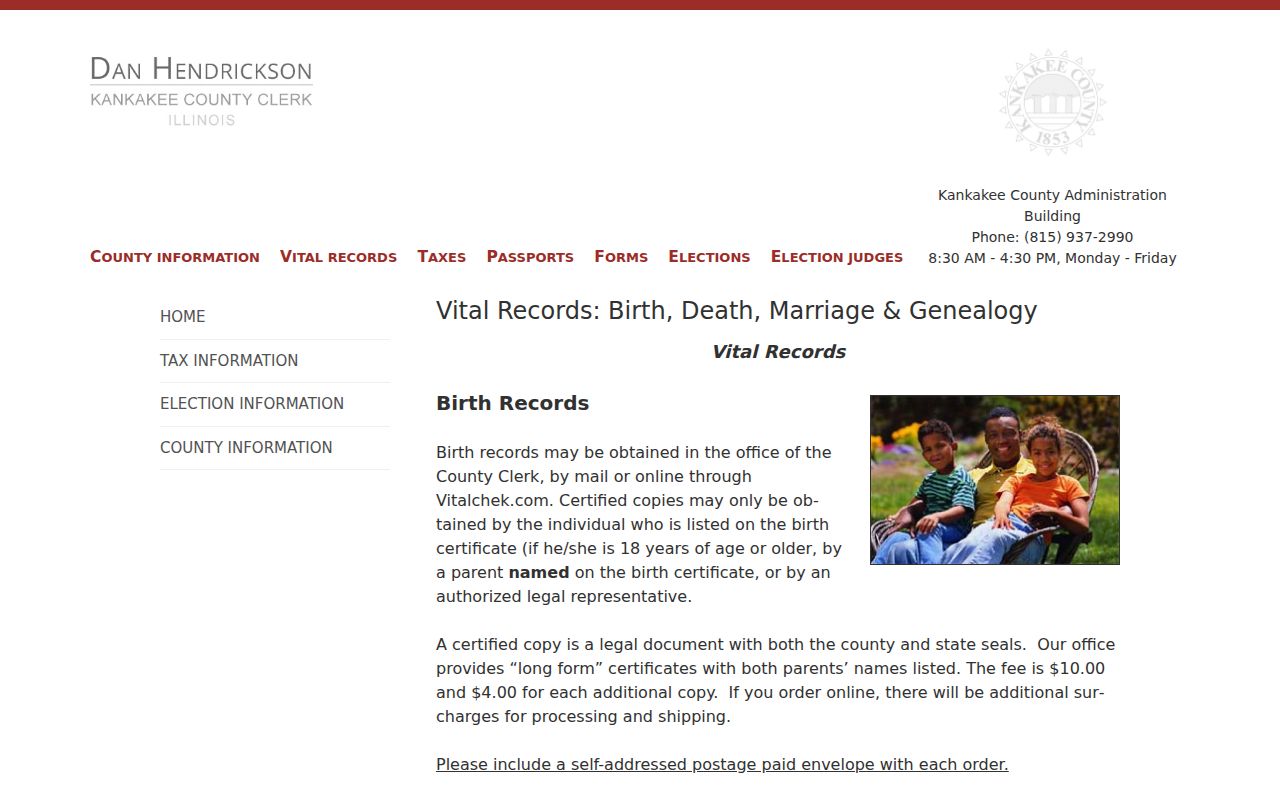
The county records page shown above is another route when the trail reaches a birth, death, marriage, or genealogy request. Eligibility and age rules differ from the open deed index, so use the event-specific form rather than assuming every certificate is public.
Kankakee Past Household Trail
Owners are only part of the story. The located city directory runs begin in 1876 and continue, with gaps, through city-only volumes in 1981. No separate verified run of Kankakee criss-cross volumes was found. Ask Kankakee Public Library whether address-first or telephone volumes are available, or use the street sections and compass notation in the known directories. The collection detail belongs on the Kankakee city directories page.
- Transcribe the address exactly, including side, corner, and cross-street abbreviations.
- Check the nearest directory before and after the deed date, noting missing volumes.
- Pair the address with the nearest released federal census year.
- Search the KPL obituary index, then open the cited Daily Journal page on microfilm or digitally.
- Use probate files and death records to test an estate or end-of-life connection.
KPL holds newspaper microfilm from the 1850s to the present and describes a long-running digitization project with Olivet Nazarene University. The obituary spreadsheet is a finding aid, not certified proof. IRAD also lists Kankakee probate files from 1853 to 1900. Together, those channels can explain why a name vanishes from a directory without turning absence into a claim.
Newspaper work should begin with a date, title, and page when possible. Kankakee Public Library can help with Daily Journal and predecessor microfilm, licensed genealogy tools, and interlibrary loan. A sale notice may explain a transfer before the deed was recorded. A probate notice may identify an estate or heirs. An obituary may connect relatives and former places, yet each proves only the event it states. Save the citation and compare it with the nearest directory.
Vital records require separate access checks. The County Clerk offers counter, mail, and VitalChek routes. Local genealogy thresholds are 75 years for births, 50 years for marriages, and 20 years for deaths. Eligibility still governs ordinary certified copies. County marriage records begin in 1853, while divorce decrees are Circuit Clerk files. Use the event and date to choose the custodian instead of sending one broad request.
Keep a dated research log as the trail grows. Record the spelling, address form, book or image citation, search terms, and custodian for each result. That log makes gaps clear and prevents a later index match from being attached to the wrong Kankakee household.
The Illinois death-record access page explains state eligibility and the genealogy distinction.
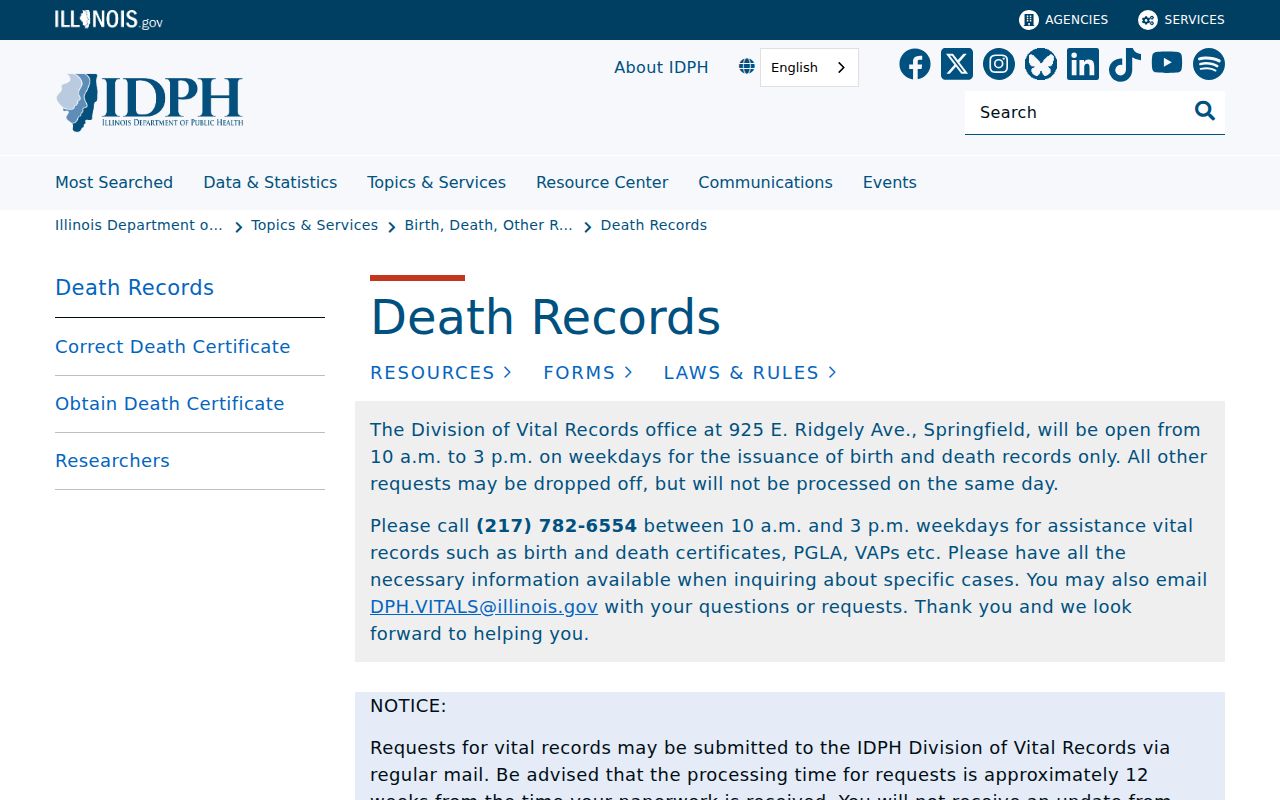
A death record can confirm an event, while the obituary may name survivors or a former place. Neither by itself proves every year of occupancy.
The Illinois birth certificate page sets out who may request a certified copy and what identification is required.
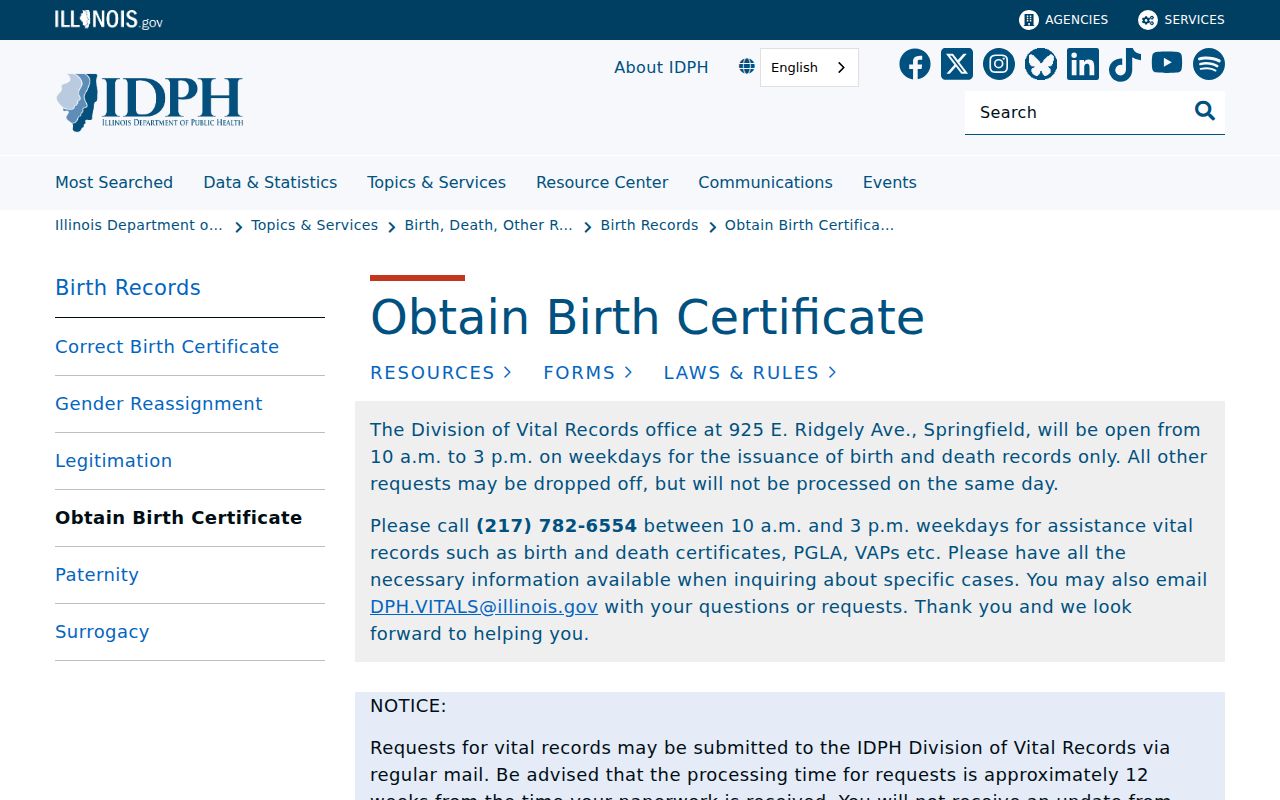
That controlled route is useful for eligible family research, but a birth certificate is not a general address directory.
Lawful use. Research Kankakee previous residents for house history, family history, or a lawful estate matter. Never use an old address to track, harass, or endanger a living person.